17/8/11

LANGUAGE FUNCTIONS practice

Indicate the Language Functions in the following dialogues:


1.Kristin : Hello, Vijaya, Happy Deepavali to you and your family !
Vijaya : Thank you. Do come in. I'm glad you have come.

(A) To wish
(B) To request
(C) To welcome
(D) to inform

2. Keane : The race will start at 8 a.m., won't it ?
Clerk : That's right. After registration, you have to assemble at the starting line in the field.

(A) To inform
(B) To greet
(C) To request
(D) To describe

3. Lily : Lehman fell while climbing up the rambutan tree.
Rose : I shouldn't have asked him to pluck the rambutans.

(A) To complain
(B) To regret
(C) To apologize
(D) To advise
4. Ronnie : Our team played badly, especially I.
Mat : It's all your fault. You have let the team down.

(A) To advise
(B) To blame
(C) To warn
(D) To protest

5. David : Hello, Sam. You look worried. can I help you ?
Sam : Could you lend me twenty dollars ? I need it urgently.

(A) To inform
(B) To describe
(C) To offer
(D) To request

6. Billy : Why don't you borrow Aileen's bicycle ?
Sarah : Her bicycle has a flat tyre.

(A) To offer
(B) To explain
(C) To advise
(D) To instruct


Aswers / Keys : in the comments section.

16/8/11

Programmes , games and courses to improve your English !

Os presentamos unos interesantes programas, juegos y cursos para mejorar vuestro conocimiento y pronunciación del Inglés; así como el de vuestros alumn@s.


"Aprende la correcta pronunciación de las palabras en inglés”

WikSpeak

ABA ENGLISH mini-course.

“Curso para aprender inglés, concretamente la gramática”

ABAEnglish MiniCourse

SELINGUA 5.2

“Siete divertidos juegos para aprender cuatro idiomas”

Selingua

SPANGLISH 3.0

“Traducción casi instantánea del inglés sin pulsar ni una tecla”
TRIVINET (TRIVIAL ONLINE)

TRIVINET

“Demuestra lo que sabes en este juego de preguntas y respuestas on-line”

TriviNET


13/8/11

English as a National Foreign Language in India. (READING COMPREHENSION TEXT) (CAE) C1


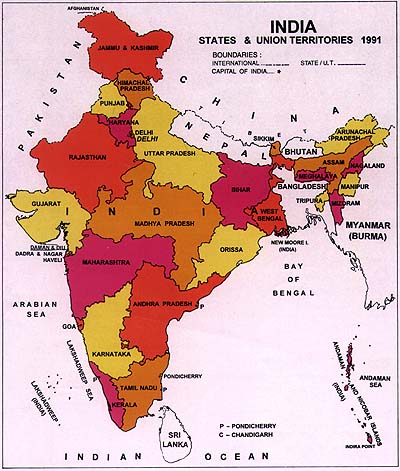
India has two national languages for central administrative purposes: Hindi and English. Hindi is the national, official, and main link language of India. English is an associate official language. The Indian Constitution also officially approves twenty-two regional languages for official purposes.


Dozens of distinctly different regional languages are spoken in India, which share many characteristics such as grammatical structure and vocabulary. Apart from these languages, Hindi is used for communication in India. The homeland of Hindi is mainly in the north of India, but it is spoken and widely understood in all urban centers of India. In the southern states of India, where people speak many different languages that are not much related to Hindi, there is more resistance to Hindi, which has allowed English to remain a lingua franca to a greater degree.

Since the early 1600s, the English language has had a toehold on the Indian subcontinent, when the East India Company established settlements in Chennai, Kolkata, and Mumbai, formerly Madras, Calcutta, and Bombay respectively. The historical background of India is never far away from everyday usage of English. India has had a longer exposure to English than any other country which uses it as a second language, its distinctive words, idioms, grammar and rhetoric spreading gradually to affect all places, habits and culture.

In India, English serves two purposes. First, it provides a linguistic tool for the administrative cohesiveness of the country, causing people who speak different languages to become united. Secondly, it serves as a language of wider communication, including a large variety of different people covering a vast area. It overlaps with local languages in certain spheres of influence and in public domains.

Generally, English is used among Indians as a ‘link’ language and it is the first language for many well-educated Indians. It is also the second language for many who speak more than one language in India. The English language is a tie that helps bind the many segments of our society together. Also, it is a linguistic bridge between the major countries of the world and India.

English has special national status in India. It has a special place in the parliament, judiciary, broadcasting, journalism, and in the education system. One can see a Hindi-speaking teacher giving their students instructions during an educational tour about where to meet and when their bus would leave, but all in English. It means that the language permeates daily life. It is unavoidable and is always expected, especially in the cities.

The importance of the ability to speak or write English has recently increased significantly because English has become the de facto standard. Learning English language has become popular for business, commerce and cultural reasons and especially for internet communications throughout the world. English is a language that has become a standard not because it has been approved by any ‘standards’ organization but because it is widely used by many information and technology industries and recognized as being standard. The call centre phenomenon has stimulated a huge expansion of internet-related activity, establishing the future of India as a cyber-technological super-power. Modern communications, videos, journals and newspapers on the internet use English and have made ‘knowing English’ indispensable.

The prevailing view seems to be that unless students learn English, they can only work in limited jobs. Those who do not have basic knowledge of English cannot obtain good quality jobs. They cannot communicate efficiently with others, and cannot have the benefit of India’s rich social and cultural life. Men and women who cannot comprehend and interpret instructions in English, even if educated, are unemployable. They cannot help with their children’s school homework everyday or decide their revenue options of the future.

A positive attitude to English as a national language is essential to the integration of people into Indian society. There would appear to be virtually no disagreement in the community about the importance of English language skills. Using English you will become a citizen of the world almost naturally. English plays a dominant role in the media. It has been used as a medium for inter-state communication and broadcasting both before and since India’s independence. India is, without a doubt, committed to English as a national language. The impact of English is not only continuing but increasing.

Questions


Q1 - According to the writer, the Indian constitution recognises

22 official languages.

Hindi as the national language.

2 national, official languages.

2 national languages.

Q2 - English's status as a lingua franca is helped by

its status in northern India.

the fact that it is widely understood in urban centres.

the fact that people from the south speak languages not much related to Hindi.

it shares many grammatical similarities with Hindi.

Q3 - In paragraph 3, 'toehold' means that English

dominated India.

changed the names of some cities in India.

has had a presence in India.

has been in India longer than any other language.

Q4 - Hindi-speaking teachers

might well be heard using English.

only use English.

only use English for instructions.

do not use English.

Q5 - In paragraph eight, it says 'the prevailing view', which suggests that

the view is correct.

the view is held by the majority.

the view is incorrect.

the view is held by the minority.

Q6 - English in India

is going to decrease.

has decreased since independence.

causes disagreement.

is going to have a greater importance.

the keys  are in the comments of this post!! (las soluciones están en los comentarios)

12/8/11

READING COMPREHENSION (ADVANCED LEVEL)

Mark Rothko


Mark Rothko, one of the greatest painters of the twentieth century, was born in Daugavpils, Latvia in 1903. His father emigrated to the United States, afraid that his sons would be drafted into the Czarist army. Mark stayed in Russia with his mother and older sister; they joined the family later, arriving in the winter of 1913, after a 12-day voyage.

Mark moved to New York in the autumn of 1923 and found employment in the garment trade and took up residence on the Upper West Side. It was while he was visiting someone at the Art Students League that he saw students sketching a nude model. According to him, this was the start of his life as an artist. He was twenty years old and had taken some art lessons at school, so his initial experience was far from an immediate calling.
In 1936, Mark Rothko began writing a book, which he never completed, about the similarities in the children's art and the work of modern painters. The work of modernists, which was influenced by primitive art, could, according to him, be compared to that of children in that "child art transforms itself into primitivism, which is only the child producing a mimicry of himself." In this same work, he said that "the fact that one usually begins with drawing is already academic. We start with colour."

It was not long before his multiforms developed into the style he is remembered for; in 1949 Rothko exhibited these new works at the Betty Parsons Gallery. For critic Harold Rosenberg, the paintings were a revelation. Rothko had, after painting his first multiform, secluded himself to his home in East Hampton on Long Island, only inviting a very few people, including Rosenberg, to view the new paintings. The discovery of his definitive form came at a period of great grief; his mother Kate died in October 1948 and it was at some point during that winter that Rothko chanced upon the striking symmetrical rectangular blocks of two to three opposing or contrasting, yet complementary colours. As part of this new uniformity of artistic vision, his paintings and drawings no longer had individual titles; from this point on they were simply untitled, numbered or dated. However, to assist in distinguishing one work from another, dealers would sometimes add the primary colours to the name. Additionally, for the next few years, Rothko painted in oil only on large vertical canvasses. This was done to overwhelm the viewer, or, in his words, to make the viewer feel enveloped within the picture.

On February 25, 1970, Oliver Steindecker, Rothko’s assistant, found him in his kitchen, lying on the floor in front of the sink, covered in blood. His arms had been cut open with a razor. The emergency doctor arrived on the scene minutes later to pronounce him dead as the result of suicide; it was discovered during the autopsy that he had also overdosed on anti-depressants. He was just 66 years old.

QUESTIONS ABOUT THE TEXT:

Q1 - Mark Rothko emigrated to the United States


with his father and elder sister.

with his mother and brothers.

with his mother and elder sister.

with all his family.


Q2 - Rothko wanted to be an artist

from his early childhood.

when he joined the Art Students League.

when he watched students drawing.

when he moved to the Upper West Side.


Q3 - Rothko thought that modern art

was primitive.

could be compared to children's pictures.

was already academic.

was childish.

Q4 - Rothko's distinctive style

was inspired by Rosenberg.

resulted from moving to Long Island.

resulted from his grief.

evolved in 1948.

Q5 - Who named paintings by their colours?

Rosenberg

Rothko

Dealers

Steindecker

YOU CAN FIND THE ANSWERS Y THE COMMENTS' SECTION OF THIS POST!!

5/8/11

USEFUL VOCABULARY FOR COMPOSITIONS (1)


We are going to show a very useful list with the most important terms for your compositions in English!
Letter A

a corto plazo <> as soon as possible
a corto plazo <> in the short term
a decir verdad <> actually

a decir verdad <> as a matter of fact

a decir verdad <> in fact

a decir verdad <> to tell the truth

a deshora <> at an unusual time

a diario <> day in day out

a diario <> everyday

a estas alturas <> as late as this

a estas alturas <> at this point

a este respecto <> for that matter
a este respecto <> with regard to this matter

a fin de cuentas <> after all

a fin de cuentas <> all things considered

a fin de cuentas <> finally

a fin de cuentas <> in short

a fin de cuentas <> taking everything into account

a grandes rasgos <> briefly

a grandes rasgos <> in a few words

a grandes rasgos <> in a general way
a juzgar por las apariencias <> judging by appearances

a juzgar por las apariencias <> on the face of it

a la distancia <> in the distance

a la intemperie <> in the open air

a la intemperie <> out of doors

a la larga <> eventually

a la larga <> in the end

a la mayor brevedad posible <> as soon as possible

a la sazón <> at the time

a la ventura <> at random

a la ventura <> with no fixed plan

a la vez <> at the same time

a la vez <> together

a la vista de las dificultades <> in the light of the difficulties

a la vuelta de 6 años <> at the end of 6 years

a lo más <> at most

a lo más <> at the most

a lo mejor <> maybe

a lo mejor <> perhaps

a lo que parece <> apparently

a lo que parece <> to all appearances

a lo sumo <> at most

a los ojos de muchos <> in the judgement of many

a manera de ejemplo <> as an example

a manera de ejemplo <> as an illustration

a mi costa <> at my expense

a mi juicio <> in my opinion

a mi parecer <> in my view

a mi parecer <> to my way of thinking

a modo de ejemplo <> by way of example

a nivel popular (comunitario o local) <> at the grassroots

a ojo de buen cubero <> at a rough estimate
a pesar de <> despite

a pesar de <> in spite of

a pesar de todo <> in spite of everything

a pesar mío <> against my will

a pie juntillas <> firmly (believe)

a posta <> intentionally

a posta <> on purpose

a primera vista <> at first blush

a primera vista <> at first sight

a propósito <> by the way

a simple vista <> at a glance

a simple vista <> at first

a su debido tiempo <> in due time

a su tiempo <> at the right time

a su tiempo <> in due time

a tal efecto <> for the purpose
a tiempo <> on time

a toda costa <> at all costs

a todas luces <> obviously
a través <> through

a última hora <> at the eleventh hour

a última hora <> at the last minute

a veces <> at times

a veces <> sometimes

actualmente <> currently

además <> in addition

además <> moreover
ahora bien <> however

ahora bien <> nevertheless

al aire libre <> outdoors

al azar <> at random

al contrario <> on the contrary

al correr de los años <> as the years go by

al correr de los años <> as the years roll by

al efecto <> for that purpose

al fin <> at last

al fin <> eventually

al fin <> finally
al final <> after all

al final <> in conclusion
al pie de la letra <> exactly according to instructions

al pie de la letra <> literally

al pie de la letra <> to the letter

al pie de la letra <> word for word

al principio <> at the beginning

al principio <> at the outset

al principio <> at the start

al principio <> in the beginning

al pronto <> at first
al revés <> backwards

al revés <> in the opposite way

al revés <> in the reverse order

al revés <> inside out

al revés <> upside down

ambos (ninguno) <> both (neither)

ante <> before

ante mí <> in my presence

ante todo <> above all

ante todo <> first of all

antiguamente <> formerly

aparentemente <> apparently

aparte <> besides

aparte de esto <> apart from this

apresuradamente <> hastily

así <> as

así <> thus

así (que) <> so

así como <> as well as

así parece <> so it seems

aún <> still

aun a pesar de <> even though

aún así <> even so

aún así <> for all that

aunque <> although

aunque <> even though

aunque <> though

aunque no lo parezca <> incredible as it may seem

aunque parece extraño <> curiously enough

aunque sea cierto <> although this may be true

16/7/11

What are the basics of teaching English to non-native speakers?

You can’t be an ESL or EFL teacher just because you speak English as a mother tongue. This article explains some of the basics of teaching English to non-native speakers of English.


  • Get a grammar reference

Invest in a good grammar guide. If you are a native speaker, you will know how to speak and write good English. But knowing grammar rules is one thing; knowing how to explain those rules is quite another. When you buy a reference guide, try to get one especially designed for ESL / EFL students. Michael Swan’s Practical English Usage published by Oxford University Press is ideal for both teachers and learners. There are several other books too.


  • Keep It Simple

When teaching grammar to ESL students focus on one specific point at a time. Trying to teach too many rules at a time will only confuse your students. Say, for example, you are teaching the uses of the verb have. Have, as you probably know, has many rules. It can be used to form the perfect verb forms. It can be used to show possession. Have can be an auxiliary verb. It can also be a principal verb. Instead of teaching all of these uses of have at all once, focus on one at a time. Once you have taught those rules move to the next.


  • Slow down while speaking

Native English speakers often speak too quickly. Slow down, otherwise your students may find it difficult to follow what you are saying. Keep your vocabulary simple. Use words and phrases that your students are already familiar with.

  • Limit the use of idioms and phrasal verbs

Native speakers have no difficulty understanding idioms or phrasal verbs. It comes naturally to them. Most ESL learners, on the other hand, have a tough time understanding these peculiar word combinations. By limiting the use of idioms and phrasal verbs you can go a long way in helping students learn more effectively.

15/7/11

LONDON UNDERGROUND (TUBE)

Let's learn some culture today and learn something about LONDON TUBE.


The London Underground (locally known as the Tube) is the biggest and oldest metro system in the world. It’s also one of the most convenient, serving about 20 hours on a daily basis. Each of the Underground lines has a different name and colour. This helps you easily follow your route on the map.


Upon your arrival at a station, you should have a look at the colour-coded signs that will direct you to the line you’re looking for. The London Underground system is divided into 6 different fare zones. The London city centre is of course in Zone 1. Your ticket price depends on the number of zones through which you travel. You can easily buy your ticket from an automatic ticket machine or alternatively at the ticket office at any station. Both single and return tickets are available and they are valid only on the date shown.

If you know where you want to go, I recommend you should use the ticket machines because they can save a lot of your time. The instructions are easy to follow. The ticket machines usually give change, but I would suggest that you use the correct money if possible. By doing this, you will help keep change for other passengers who really need it.

Most London Underground stations have ticket gates. You need to pass through them quite a few times throughout your journey. Upon your arrival, just insert your ticket into the slot of the machine through which the ticket will pass. You can then take it from a slot at the top and the gates will open to let you through. When you have completed your last journey, the gates will open and let you through but your ticket will be retained by the machine.

As far as I’m concerned, London’s Tube is probably one of the most famous in the world. However, I feel that there is something about being underground I am not very keen on. For instance, the massive crowds swarm towards the train platforms, rushing up and down stairs, following the signs and the annoying ‘Mind the gap’ thing. Based on my experience, the trains are also absolutely packed. I have so many times been pushed up against someone really stinky. It’s never easy to find yourself a seat, and you can hardly see anything. Having said that, I still believe it is the cheapest and quickest way to get around London though.

Don't forget to mind the gap!!!

To sum up, The London Underground is really easy to use so long as you are equipped with a map. To avoid wasting your time, simply validate your ticket and pass through the gates, stand on the right hand side of the steep escalators, or just walk down on the left if you are in a rush. The Tube normally arrives every few minutes so you don’t need to run. In summer the tube can be really hot and smelly, but again it is another part of travelling around the capital of England.

12/7/11

ESL Teaching Tips

  • Let them talk

Gaining better communication skills is the top priority for most ESL students. Pay careful attention to the most common errors your students make during an exercise. Once they have finished doing the exercise, correct them. If a teacher corrects every mistake the students make, they will become hesitant to speak because they are afraid of being corrected. Frequent correction will also disturb the natural flow of conversation. By correcting their mistakes after they have finished their exercise, you can give them more confidence.
  • Create the right setting

Setting the right mood is extremely essential because it helps students to concentrate. Many teachers recommend playing music in the class to improve the spirits of students.
  • Get your students more physically involved in the lesson.

Get your students physically involved in the lesson. Give them short breaks every now and then and ask them to get up and walk about. These short breaks will help rise their energy levels and improve learning.
  • Put special focus on developing communication skills.
Foreign students learn English because they want to be able to communicate in English. Each exercise should have a communicative aspect connected to it. For example, while teaching tenses, get students ask each other questions about their experiences. Ask them to use the specific tenses.
  • Keep a folder of great lessons
If you find a great lesson, make an extra photocopy for future use and keep it aside in a special folder.

7/7/11

SAY AND WRITE NUMBERS IN ENGLISH

Numbers in english are a bit confusing , these are some tips not to get lost! / Los números en inglés son un poco confusos y podemos perdernos, aquí tenéis alguna información útil.

Fractions and decimals


We say simple fractions like this:

1/8 = one eighth

5/7 = five sevenths

2/5 = two fifths

3/4 hour = three quarters of an hour


More complex fractions are usually expressed by using the word over.

218/576 = two hundred and eighteen over five hundred and seventy six

We say and write decimals like this:

0.278 = nought point two seven eight (US zero point two seven eight)

(NOT nought point two hundred and seventy eight)


Nought, zero, nil etc


The figure 0 is usually called nought in British English, and zero in American English. When we say numbers one figure at a time, 0 is often called oh.

My phone number is nine three two five oh six (= 932506)

In measurements of temperature , 0 is called zero in both British and American English.

Zero scores in team games are called nil. In tennis and similar games, the word love is used for zero.


And the score is: Brazil three, Italy nil.

Forty-love: Nadal to serve

Telephone numbers


Each figure is said separately. There is usually a pause after groups of three or four figures. If the same figure comes twice, British people usually say double.


657 4481 – six five seven, double four eight one (British)

- six five seven, four four eight one (US)

Roman numbers

The names of kings and queens are still written in Roman numbers.

It was built in the time of Louis XIV.

Queen Elizabeth II

Henry V

Cardinal and ordinal number

The numbers one, two, three, four etc., are called cardinal numbers

whereas the numbers first, second, third, fourth etc., are called ordinal numbers.

Ordinal numbers are used before nouns. After a noun, we use cardinal numbers.


the fourth chapter – chapter four

the third act – Act Three

2/7/11

THE EDUCATION SYSTEM IN THE USA /El Sistema Educativo en los estados Unidos.

The Education System in the USA


In the USA, children start school when they are five or six years old. Depending on the state, schooling is compulsory until the age of 16 or 18. Children younger than five can go to a nursery school or preschool.

At the age of five or six, the children attend elementary school (also known as grade school or grammar school), which last six years. The fist year at elementary school is called kindergarten.

After elementary school, students attend middle school (also known as junior high school) for three years. Then they continue at high school. In some states, students have to stay in school until they are 18 years old. In other states they may leave school at 16 or 17 with parental permission.

Age School

< 5 nursery school / preschool

5-11 elementary school

11-14 middle school / junior high school

14-18 high school / senior high school

When students in the USA say what year they are in, they usually use ordinal numbers, e. g. ‘tenth grade’. (In the UK students would use cardinal numbers, e. g. ‘year ten’.)

Classes

At elementary school pupils primarily learn how to read, write and count. There are about 20 to 30 pupils in one class.

At junior and senior high school, mandatory subjects are English, maths, biology, chemistry, physics, physical education and history. Schools also offer optional courses from which the students can choose, e. g. art, modern languages, computers. Physical education is a very important subject in the United States – many students participate in sports programs.

Gifted and talented students can take advanced courses in their schools or attend additional courses at community colleges in the afternoons or during the holidays. Often such courses are later acknowledged by universities, and can facilitate early graduation.

Grading Scale

In the USA (as in other English speaking countries) letter grades are used in reports.

■A > 90 % (excellent)

■B > 80 % (very good)

■C > 70 % (improvement needed)

■D > 60 % (close fail)

■E > 50 % (fail)

■F < 50 % (fail)

In general, only grades A to C are a 'pass' – a plus (+) or minus (-) might be added (e. g. A-, B+).

Different Kinds of Schools

Most students in the USA are enrolled in public schools. These are financed through taxes, so parents do not have to pay for their children's education. About 10 % of US students attend private schools, where parents have to pay a yearly fee.

Another option is homeschooling: approximately 1-2 % of parents in the USA educate their children at home. Some reasons for homeschooling are religious views, special needs (e. g. handicapped children), or problems in traditional schools (bullying, drugs etc.). However, there is also opposition to homeschooling claiming that the students have difficulties socializing with others, that homeschooling (often carried out by the parents) is of a poor academic quality and that (especially concerning religion) extremist views might be encouraged.

School Uniforms

It is not common for students in the USA to wear school uniforms, but many schools have dress codes telling students what kind of clothing is or is not allowed in school. Some schools (especially private schools) have started to require their students to wear school uniforms in order to improve school discipline and avoid 'fashion cliques'.