


 Entradas


30/7/16
For how long or How long?
Someone asked me today in class about the use of
For how long or How long?
This is the answer:
Back in the nineteenth century someone decided, on the analogy of a language other than English, that it was improper to end a sentence in English with a preposition, even though the language had been doing just that since its beginnings. So we're required to follow a rule in formal written English that says we must put the preposition and its objects in the correct order near the word they modify.
So in formal English we write: "For how long have you been in therapy?"
In colloquial U.S. English we say: "How long have you been in therapy for?"
The particular example you chose has a simpler solution that works in both formal and colloquial English: just omit "for," since "how long" and "for how long" are synonymous: "How long have you been in therapy?"
Most other prepositions in questions can't simply be discarded: "To whom did you give the message?" is formal while "Who did you give the message to?" is standard in spoken U.S. English. Note the nominative case of the pronoun "Who," also colloquial.
Spanish Explanation / Ahora en Español:
Algunas indicaciones para diferenciar How long? y For how long? em inglés. Como regla general diremos que las preposiciones en las preguntas informales van al final de la pregunta. En este caso en concreto la mejor solución es usar How long? Ya que significa "¿Por cuánto tiempo? Y es equivalemte a for how long? que queda algo redundante.

25/10/15
¿Por qué los niños piden chucherías en Halloween? Whydo kids ask for sweets in Halloween?
¿Sabéis por qué los más pequeños van piediendo chucherías por las casas la noche de Halloween?

Os cuento de dónde viene la leyenda...
Los celtas dejaban dulces y comida afuera de sus casas para no “enfurecer” a los espíritus que pudieran estar sueltos ese día y usaban máscaras de formas diabólicas con figuras y decoraciones para “darles miedo” y alejarlos.
Es por eso que los niños se tienen que disfrazar para ir recorriendo las casas pidiendo dulces bajo el lema “trick or treat” (literalmente traducido como “truco o trato” pero mejor conocido como “dulce o travesura”), la travesura hace alusión a la “maldad” de los espíritus.
It all comes from an ancient custom at the time of Celts, they left some food outside in order to calm down the evil spirits. They believed that the spirits didn't come in and that's why they also set some terrifing masks and decorations to scare the spirits and ghosts.
This old tradition has been adapted by children who are supposed to be the evil spirits and if you don't give food or chocolates as in the past they will play some tricks on you!!
Happy Halloween!
27/9/14
Question Tags practice
See if you can finish the following sentences with the correct question tag. The first ones are relatively easy, but then they get more difficult!

- You don't like me, ... ...?
- It isn't raining, ... ...?
- You've done your homework, ... ...?
- I'm not late, ... ...?
- I'm invited to your party, ... ...?
- You like German food, ... ...?
- You'll come to my party, ... ...?
- You remembered to feed the cat, ... ...?
- Let's play tennis, ... ...?
- There's a problem here, ... ...?
- He never says a word, ... ...?
- Nobody came to your party, ... ...?
- Don't forget, ... ...?
- You think you're clever, ... ...?
- So you think you're clever, ... ...?
14/5/14
3rd TYPE CONDITIONALS Explanation and practice

The 3rd conditional sentence structure is also called the past unreal conditional or past hypothetical conditional. It is used to imagine a different past than the one that happened.
((Este tipo de condicional se conoce como "IMPOSIBLES" pues ya ocurrieron en el pasado y no tenemos posibilidad de cambiar el resultado, solo nos queda lamentarnos.))
If I hadn’t eaten so much, I wouldn’t have got so fat. (Si yo no hubiera comi tanto, no habría engordado tanto)
The if clause is unreal. It did not happen. The result is what would have happened IF the if clause were real:
If I hadn’t eaten so much,Did I eat a lot? Yes, I did. However, I’m imagining what would have happened if I hadn’t eaten so much.
What would have happened if I hadn’t eaten so much? The result:
…I wouldn’t have gotten* so fat.Am I fat now? Yes. I would not be fat now if hadn’t eaten so much in the past. If I ate well in the past, I would not be fat now.
*In American English, ‘gotten’ is used at the past participle of ‘got.’ In British English, ‘gotten’ is not used.
[I'm not fat in real life! I am just using this as an example sentence!]
The 3rd conditional form:
If + past perfect, would have + past participle
NOTE:
*Because you are imagining the past, you can ONLY use if. In this sentence structure, you cannot use when, after, or any other time conjunction. (normalmente usaremos la partícula condicional if, ya que es pasado)
Common uses of this sentence structure:
((Usos comunes de la tercera condicional: ))

1.What would you have done if … ? (¿Qué habrías hecho si...?)
What would you have done if you hadn’t been accepted at any university?
What would you have done if we hadn’t been there to help?
What would you have done differently if you had known you would never speak to him again?
2. If I had known… (Si yo hubiera sabido que...)
If I had known that you needed help, I would have come!
If we had known you were sick, we would have gone to visit you in the hospital.
We wouldn’t have driven all this way if we had known the museum was closed.
If I had known that you needed a ride to school, I would have driven you.
I really wanted to see that movie! If I had known you were going, I would have gone with you!
3. You can use this sentence structure to express regret about something in the past, and to wish the past had happened differently.
(Usamos la 3ª condicional para lamentarnos de una situación pasada que queremos hubiese sido de manera diferente)
If we had known the movie was so awful, we wouldn’t have wasted our money on it.
If I had finished high school and gone to university, I would have gotten a better job.
4. You can use this structure to criticize someone/something or point out mistakes:
(Para criticar algo o señalar errores)
If you hadn’t stayed out so late last night, you wouldn’t have slept in and been late for work!
It would have been quicker if we had taken a taxi to the park instead of walking.
More example sentences:
If I hadn’t gone to the party, I would have never met my husband.
We would have gone out last night if we hadn’t been so tired.
If his brother hadn’t reminded him, Dan would have forgotten his wife’s birthday.
If she had seen the ice on the road, she would have slowed down and she wouldn’t have gotten in an accident.
Other modal verbs can be used in the result clause:
might have + past participle = maybe
If I had known you would be at the party, I might have gone.
If I had known about his police record, I might not have dated him.
If he had finished high school, he might have had a better life.
If she had been wearing her seatbelt, she might have survived the car accident.
could have + past participle = possibility or ability
I could have been a world-class swimmer if I had practiced more when I was younger.ONLINE ACTIVITIES to PRACTICE: (practica en tu ordenador la 3ª condicional)
If I had known you didn’t have a car, I could have driven you to the meeting.
If my parents hadn’t lent me money, I could never have afforded university.
If you had told me the TV was broken, I could have fixed it for you!
1. In this exercise, you will practise forming the third conditional. Based on the example sentence, complete the third conditional sentence by filling in the spaces.
1/4/14
ANIMAL IDIOMS

Animals feature strongly in idioms. This is logical if we consider the various habits and characteristics of animals that we have lived side-by-side with for centuries.
a sly fox / to be as sly as a fox
Someone who is very experienced and has acquired a lot of guile.You can’t trust him; he’s as sly as a fox.
to let sleeping dogs lie
To leave well alone and refrain from starting trouble.You must have known that mentioning his ex-wife would upset him. You should have let sleeping dogs lie.
as stubborn as a mule
Someone who is unwilling to listen to reason or change his mind.It’s a waste of time trying to get him to change his mind; he’s as stubborn as a mule.
a dark horse
A person of unknown abilities or a person who has kept his abilities to himself and may surprise everybody. This is a racing metaphor which says that an unknown horse which could win the race unexpectedly.Who would have thought George would win the competition? He’s a real dark horse.
no room to swing a cat
A very small, cramped place. The original phrase was probably ‘not room to swing a cat-o’nine-tails’, and dates from the time when sailors were flogged (whipped) on ships. The floggings took place on the deck because the cabins were too small.This room’s not big enough to swing a cat in.
to put/set the cat among the pigeons
To provoke a quarrel.You shouldn’t have criticised the boss in your speech; now you’ve really put the cat among the pigeons.
a dog’s-body
One who does the routine or mechanical work, especially that which no one else wants to do.When I worked in the factory I was the dog’s-body; I was given all the worst jobs.
as weak as a kitten
Feeble, very weak, having no strength.After her operation she felt as weak as a kitten.
20/3/14
LEARNING WITH SONGS: Say Something, A great big world
Today we learn English with songs. Hoy aprendemos con esta bella canción romántica.
Songs are extremely useful to improve your pronunciation and listening.
Esta canción es muy sencilla.
If you don't know the wods in bold, learn them! Si no sabes las palabras de colores apréndelas, son muy útiles.
LYRICS
Say something I'm giving up on you
I'll be the one if you want me too
Anywhere I would have followed you
Say something I'm giving up on you
And I am
Feeling so small
It was over my head
I know nothing at all
And I will Stumble and fall
I'm still learning to love
Just starting to crawl
Say something I'm giving up on you
I'm sorry that I couldn't get to you
Anywhere I would have followed you
Say something I'm giving up on you
And I will swallow my pride
You're the one that I love
And I'm saying goodbye
Say something I'm giving up on you
I'm sorry that I couldn't get to you
Anywhere I would have followed you
Say something I'm giving up on you
Say something I'm giving up on you
Say something.
Letra traducida en español
Diga algo que me estoy dando por vencido por ti
Yo seré el único si tú me quieres también
Donde quiera yo te hubiera seguido
Diga algo que me estoy dando por vencido por ti
Y me
Siento tan pequeño
Estaba sobre mi cabeza
Yo no sé nada en absoluto
Y voy
A tropezar y caer
Todavía estoy aprendiendo a amar
Apenas comenzando a gatear
Di algo que me estoy dando por vencido por ti
Lo siento por no poder tenerte
Donde quiera yo te hubiera seguido
Di algo que me estoy dando por vencido por ti
Y voy a tragarme mi orgullo
Tú eres a quien amo
Y estoy diciendo adiós
Di algo que me estoy dando por vencido por ti
Lo siento por no poder tenerte
Donde quiera yo te hubiera seguido
Di algo que me estoy dando por vencido por ti
Di algo que me estoy dando por vencido por ti
Di algo.
7/3/14
FOOD IDIOMS
Idioms are very important to sound natural in English, here are some food idioms, together with definitions and examples:

The Swedish tennis player Bjorn Borg was known for always being as cool as a cucumber on court. He never looked nervous or stressed.
Beach holidays are not my cup of tea: I much prefer going sightseeing in cities.
Don’t put all your eggs in one basket by investing all your money in one company. Invest smaller amounts in several companies.
You should take what she says with a pinch of salt – she’s always exaggerating.
My mum says that John Smith is a bad egg and she doesn’t want me to be his friend. She says he’ll get me in trouble.
Mike loves his easy part-time job and all the free time he has, but he says he wants to be rich and successful. He can’t have his cake and eat it – if he wants more money he’ll have to get a full-time job.
My daughter is the apple of my eye.
That film was so predictable and unoriginal – it was just a cheesy love story.
She doesn’t usually speak to me but yesterday she was buttering me up after she heard I had been promoted to a higher position at the company.
He’s selfish, greedy and impolite. In a nutshell, he’s horrible.
Las expresiones idiomáticas o "Frases Hechas" son muy importantes en Inglés, así sonaremos más natural al hablar. Estos son algunos divertidos "dichos" relacionados con la comida.
as cool as a cucumber
To be very relaxed and calm in a particular situationThe Swedish tennis player Bjorn Borg was known for always being as cool as a cucumber on court. He never looked nervous or stressed.
not my cup of tea
Something is not to your taste.Beach holidays are not my cup of tea: I much prefer going sightseeing in cities.
don’t put all your eggs in one basket
Spread your risks; don’t depend on one thingDon’t put all your eggs in one basket by investing all your money in one company. Invest smaller amounts in several companies.
take something with a pinch of salt
Don’t automatically believe something / Don’t immediately assume that someone is telling the truth.You should take what she says with a pinch of salt – she’s always exaggerating.
a bad egg
Someone who is often in trouble and is not to be trustedMy mum says that John Smith is a bad egg and she doesn’t want me to be his friend. She says he’ll get me in trouble.
have your cake and eat it
You can’t always have everything / you can’t have two opposing things or situations.Mike loves his easy part-time job and all the free time he has, but he says he wants to be rich and successful. He can’t have his cake and eat it – if he wants more money he’ll have to get a full-time job.
the apple of my eye
To love and adore someone.My daughter is the apple of my eye.
cheesy
To be kitsch and / or without styleThat film was so predictable and unoriginal – it was just a cheesy love story.
to butter someone up
To be especially nice to someone or give someone something in order to get what you want.She doesn’t usually speak to me but yesterday she was buttering me up after she heard I had been promoted to a higher position at the company.
in a nutshell
Basically / to summarise.He’s selfish, greedy and impolite. In a nutshell, he’s horrible.
12/10/13
WE THOUGHT WE WERE ASLEEP
Today I show you my second book for the English Readers Collection:

LEVEL: A2-B1. 4ESO, 1 Bahillerato.
AUTHOR: Rafael Alcolea Harold
Author's webpage: www.rafaelalcolea@blogspot.com.es
Genre: Science Fiction, Young Adult.
Pages: 20
PLOT:
Every year the goverments around the world give us a pill to sleep for some hours. The whole planet remains asleep at the same time, but... What would happen if you realise that you are not sleeping when you are supposed to be?
The protagonist discovers a terrible secret hidden by the rulers of our world.
Will he escape from his fate?
Link Download for FREE:
http://www.bubok.es/libros/227897/WE-THOUGHT-WE-WERE-ASLEEP
Note for teachers: You are allowed to use this material in class.
Aquellos profesores que quieran usar estos materiales en clase pueden hacerlo. Solo deberán indicar la autoría del libro.
We thought we were asleep
LEVEL: A2-B1. 4ESO, 1 Bahillerato.
AUTHOR: Rafael Alcolea Harold
Author's webpage: www.rafaelalcolea@blogspot.com.es
Genre: Science Fiction, Young Adult.
Pages: 20
PLOT:
Every year the goverments around the world give us a pill to sleep for some hours. The whole planet remains asleep at the same time, but... What would happen if you realise that you are not sleeping when you are supposed to be?
The protagonist discovers a terrible secret hidden by the rulers of our world.
Will he escape from his fate?
Link Download for FREE:
http://www.bubok.es/libros/227897/WE-THOUGHT-WE-WERE-ASLEEP
Note for teachers: You are allowed to use this material in class.
Aquellos profesores que quieran usar estos materiales en clase pueden hacerlo. Solo deberán indicar la autoría del libro.
19/6/13
THE NEXT VICTIM
Today, we present the first title of our collection of MyPlaceforEnglish's Readers in English:

Title: The Next Victim.
Author: R. Alcolea Harold.
Genre: Mystery, vampires.
Pages: 50.
Level: Intermediate (A2, B1) / Bachillerato (1,2)
Price: 0.89€ / $1.19
Link to buy the Ebook at Amazon: http://www.amazon.com/THE-NEXT-VICTIM-ebook/dp/B00DESIHXC/ref=sr_1_3?s=digital-text&ie=UTF8&qid=1371597773&sr=1-3&keywords=the+next+victim
This text is appropriate to be used in EFL Classroom. It includes questions for the understanding of the story and further activities to be carried out in class.
También podéis adquirirlo en Amazon España o cualquier país del mundo. Este libro es el primer título de la colección de lecturas para estudiantes de Inglés de nuestra web. Esperamos os guste. Se puede descargar y trabajar en clase por su económico precio.
Enlace de Amazon españa: http://www.amazon.es/THE-NEXT-VICTIM-ebook/dp/B00DESIHXC/ref=sr_1_3?s=digital-text&ie=UTF8&qid=1371597532&sr=1-3&keywords=rafael+alcolea
18/4/13
Simple plan's SUMMER PARADISE WORKSHEET
Here you are the Worksheet for Summer Paradise song by Simple Plan. The keys are in the second paper, but don't cheat and look before completing the blanks and listen to the song, if you don't have it you can watch the music video in the following link:
http://www.myplaceforenglish.blogspot.com.es/2013/04/summer-paradise-next-song-for-our-class.html
I hope you have as fun as we had today in class!!
(Si estáis aprendiendo Inglés, esta es una buena canción para empezar a mejorar vuestro Listening, y es muy divertida, fácil de seguir. Si no tenéis la canción pinchad en el enlace de arriba y podréis ver el video mientras completáis la letra de la canción. Las soluciones en la segunda hoja.)
15/4/13
Summer Paradise next song for our class
Summer is coming back so we'll practice our listening skill with this song in class. I leave the video as a starter, the lyrics and activities coming soon...
|Simple Plan lyric - Summer Paradise
15/3/13
WEATHER IDIOMS
Idioms can be confusing for non-native speakers. Someone might have said to you that you look a bit under the weather. Or perhaps you heard someone say they were snowed under. What did they mean
Well, they definitely weren’t speaking about the weather. They were using an idiom, i.e. a phrase whose collective meaning is different to the meaning of its individual words.
Here are six common weather idioms to impress your friends with.
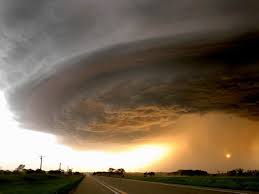 Frases idiomáticas sobre el Tiempo meteorológico.
It’s terrible weather outside; it’s raining cats and dogs.
The government is in a crisis but they look like they will weather the storm.
Oh, no! Not another new project. I’m already snowed under. I don’t have time to do any more.
Don’t worry about losing your job, it might be the best thing that’s happened to you. Remember, every cloud has a silver lining!
The government is in stormy waters over its new transportation policy.
I’m in stormy waters with my girlfriend; I didn’t get home till 2 o’clock this morning.
I’m taking the day off work today – I’m feeling a bit under the weather.
You look a bit under the weather, John. Aren’t you feeling well?
Well, they definitely weren’t speaking about the weather. They were using an idiom, i.e. a phrase whose collective meaning is different to the meaning of its individual words.
Here are six common weather idioms to impress your friends with.
raining cats and dogs
This is used to describe very heavy rain.It’s terrible weather outside; it’s raining cats and dogs.
to weather the storm
To get through a difficult time and survive.The government is in a crisis but they look like they will weather the storm.
to be snowed under
To have too much work or things to do.Oh, no! Not another new project. I’m already snowed under. I don’t have time to do any more.
every cloud has a silver lining
You can always find something positive in a bad situation.Don’t worry about losing your job, it might be the best thing that’s happened to you. Remember, every cloud has a silver lining!
stormy waters
To be in trouble. To be going through a period of problems.The government is in stormy waters over its new transportation policy.
I’m in stormy waters with my girlfriend; I didn’t get home till 2 o’clock this morning.
to be a bit under the weather
To feel ill, sick; not feeling completely well.I’m taking the day off work today – I’m feeling a bit under the weather.
You look a bit under the weather, John. Aren’t you feeling well?
5/3/13
UNCOUNTABLE NOUNS OFTEN CONFUSED
10 uncountable nouns / Nombres incontables que solemos confundir :
| 1. advice 2. news 3.information 4. equipment 5. luggage | 6. experience 7. progress 8. traffic 9. trouble 10.accommodation |
- I need some advice.
- We don’t have any news.
- He doesn’t have much experience.
- There is a lot of information.
- They only have a little equipment.
- They don’t have much luggage.
- a piece of advice
- two pieces of news
- three pieces of information
- four pieces of equipment
- five pieces of luggage.
N.B. Experience also exists as a countable noun, as in this sentence: ‘We had a lot of good experiences on our trip’.
21/2/13
Present Perfect vs Past Simple (Activity)

(You'll find the answers in the comments section of this post, but we have to check it in class first)
TIPS TO LEARN PHRASAL VERBS EASIER
Seven tips for making idiomatic phrasal verbs easier to learn:

1. Be careful when checking for meaning in your dictionary – phrasal verbs often have more than one meaning. Study the context of the sentence in which you first saw the phrasal verb. From that context you may be able to tell which definition in the dictionary is the one you need.
2. If possible, ask a native speaker about the meaning of the phrasal verb.
3. Find out how common the phrasal verb is (again, a native speaker will be a big help). Focus on learning common phrasal verbs, not ones which are seldom used.
4. Learn the phrasal verb as part of a sentence or phrase (this helps you to remember it).
5. Double check that you can use the phrasal verb correctly. You can do this by inventing your own sentence containing the verb and again asking a native speaker if it’s correct. By doing this, for instance, you will see if you are putting the object of the verb in the correct place. Look at these examples: ‘I invite friends over’ and ‘I invited over friends’ are both correct because the position of the object is flexible with this verb. However, with the verb give up, we can say ‘I gave up smoking‘ but not ‘I gave smoking up’.
6. Don’t try to learn every meaning of a phrasal verb: one is enough to start with. Learn the other meanings once you are sure you’ll remember the first.
7. Look out for phrasal verbs in your favourite songs. Pop music is full of them, and having a melody makes words much easier to remember.
How about starting with the songs at MYPLACEFORENGLISH ?
6/2/13
PHRASAL VERBS WITH VERB "PUT"
Here is a list of phrasal verbs that contain put.
A word in brackets, such as something, means that we can use the phrasal with or without that word.
put something down
To stop carrying something.Put down those heavy bags you’re carrying and take a seat.
He stopped writing and put his pen down for a moment.
put money down
To pay a deposit on something.I put a £1000 deposit down on the car.
put money in
To make a financial contribution.The cost of driving to Paris and back is €400 so we all need to put in €100.
put something off
To postpone or delay something.She put off telling him the bad news until he was feeling happier.
A procrastinator is someone who is always putting things off.
put off, be put off (something)
To get the feeling that something is bad and consequently to change your mind or plan.I’d love to try oysters but the look of them always puts me off.
It puts me off my writing if lots of people are talking around me.
I was put off going to India when I read about how many tourists get ill when they go there.
be put off (by something)
To be distracted or disturbed by something else happening.The footballer missed the penalty because he was put off by the crowd whistling.
put on weight
To get fatter.He put on a lot of weight after he lost his job and had to stay at home.
No dessert for me, thanks – I don’t want to put on weight.
put something on
To turn on something electrical.I’ll put the television on – there’s a good film on tonight.
Put the light on! I can’t see.
put someone out
To be upset by something someone has done.I don’t want to put you out but could you work late tonight?
put up the price of something
To increase the price of something.The government have put up VAT again.
We’ve put up our prices in order to cover our costs.
put something up
To fix something to a wall.Why don’t you put a sign up to tell people where the party is.
I’m going to put some more pictures up on the wall.
put someone up
To accommodate someone; to let someone sleep at your house for a night or a few nights.Can you put me up for a few days while I’m in London?
put up with something
To live with something you don’t like; to tolerate something you don’t like.I have to put up with my husband’s snoring.
How do you put up with all the noise that your neighbours make?
12/1/13
GOALS AND TECHNIQUES FOR TEACHING GRAMMAR IN CLASS

( THE GUIDE BELLOW IS FOR ENGLISH TEACHERS, I'M SORRY STUDENTS, NEXT POST WILL BE FOR YOU)
Goals and Techniques for Teaching Grammar
The goal of grammar instruction is to enable students to carry out their communication purposes. This goal has three implications:
- Students need overt instruction that connects grammar points with larger communication contexts.
- Students do not need to master every aspect of each grammar point, only those that are relevant to the immediate communication task.
- Error correction is not always the instructor's first responsibility.
Overt Grammar Instruction
Adult students appreciate and benefit from direct instruction that allows them to apply critical thinking skills to language learning. Instructors can take advantage of this by providing explanations that give students a descriptive understanding (declarative knowledge) of each point of grammar.- Teach the grammar point in the target language or the students' first language or both. The goal is to facilitate understanding.
- Limit the time you devote to grammar explanations to 10 minutes, especially for lower level students whose ability to sustain attention can be limited.
- Present grammar points in written and oral ways to address the needs of students with different learning styles.
- Be sure the examples are accurate and appropriate. They must present the language appropriately, be culturally appropriate for the setting in which they are used, and be to the point of the lesson.
- Use the examples as teaching tools. Focus examples on a particular theme or topic so that students have more contact with specific information and vocabulary.
Relevance of Grammar Instruction
In the communicative competence model, the purpose of learning grammar is to learn the language of which the grammar is a part. Instructors therefore teach grammar forms and structures in relation to meaning and use for the specific communication tasks that students need to complete.Compare the traditional model and the communicative competence model for teaching the English past tense:
Traditional: grammar for grammar's sake
- Teach the regular -ed form with its two pronunciation variants
- Teach the doubling rule for verbs that end in d (for example, wed-wedded)
- Hand out a list of irregular verbs that students must memorize
- Do pattern practice drills for -ed
- Do substitution drills for irregular verbs
- Distribute two short narratives about recent experiences or events, each one to half of the class
- Teach the regular -ed form, using verbs that occur in the texts as examples. Teach the pronunciation and doubling rules if those forms occur in the texts.
- Teach the irregular verbs that occur in the texts.
- Students read the narratives, ask questions about points they don't understand.
- Students work in pairs in which one member has read Story A and the other Story B. Students interview one another; using the information from the interview, they then write up or orally repeat the story they have not read.
Error Correction
At all proficiency levels, learners produce language that is not exactly the language used by native speakers. Some of the differences are grammatical, while others involve vocabulary selection and mistakes in the selection of language appropriate for different contexts.In responding to student communication, teachers need to be careful not to focus on error correction to the detriment of communication and confidence building. Teachers need to let students know when they are making errors so that they can work on improving. Teachers also need to build students' confidence in their ability to use the language by focusing on the content of their communication rather than the grammatical form.
Teachers can use error correction to support language acquisition, and avoid using it in ways that undermine students' desire to communicate in the language, by taking cues from context.
- When students are doing structured output activities that focus on development of new language skills, use error correction to guide them.
Example:
Student (in class): I buy a new car yesterday.
Teacher: You bought a new car yesterday. Remember, the past tense of buy is bought.
- When students are engaged in communicative activities, correct errors only if they interfere with comprehensibility. Respond using correct forms, but without stressing them.
Example:
Student (greeting teacher) : I buy a new car yesterday!
Teacher: You bought a new car? That's exciting! What kind?
22/12/12
LEGADO INFINITO
Hello everybody, after four years blogging in Myplaceforenglish I have published my first novel in Spanish LEGADO INFINITO. I hope you have the opportunity to read it, I just leave the links where you can get it.
Thank you for your support.
Muchas gracias a todos tras cuatro años de apoyo en Myplaceforenglish. He publicado mi primera novela : LEGADO INFINITO. Espero que podáis leerla . Os dejo unos links para adquirirla, en Amazon sólo por 0,98€. Espero que os guste, y mis antiguos alumnos : No me critiquéis.
Muchísimas gracias.

Click in the cover to get the book.
10/12/12
Forming Comparatives and Superlatives from Adjectives
CUADRO RESUMEN DE LA COMPARATIVA Y EL SUPERLATIVO DE LOS ADJETIVOS EN INGLÉS.
Forming Comparatives and Superlatives from Adjectives:
| Type of Adjective | Example of Type | Comparative | Superlative |
One Syllable |
 strong strong |
add "er" stronger |
add "est" strongest |
One Syllable Ending Vowel Consonant |
big
thin |
double consonant and add "er" bigger thinner |
double consonant and add "est" biggest thinnest |
| More Than One Syllable | famous |
add "less" or "more" more famous |
add "most" or "least" least famous |
| More Than One Syllable Ending "y" | silly |
remove "y" add "ier" sillier for less less silly |
remove "y" add "iest" silliest for least least silly |
| Irregular | bad
good many |
no rules
worse etter more |
no
rules worst best most |
15/11/12
BRITISH VS AMERICAN ENGLISH LESSER-KNOWN WORDS

On the whole, British and American speakers of English have very few problems understanding one another. Over the last half a century or so television and film have done much to familiarise Americans with British English (BrE) and Britons with American English (AmE).
There are actually thousands of vocabulary differences between British and American English. While many of these words can be instantly understood by speakers from the other country, other words might easily baffle someone who hasn’t spent a long period of time in both countries.
First let’s look at some of the well-known vocabulary differences between Britain and the United States. Native speakers from either country should know all of these:
10 well-known vocabulary differences
petrol (BrE), gas (AmE)pavement (BrE), sidewalk (AmE)
lift (BrE), elevator (AmE)
boot (BrE), trunk (AmE)
lorry (BrE), truck (AmE)
sweets (BrE), candy (AmE)
car park (BrE), parking lot (AmE)
motorway (BrE), highway (AmE)
biscuit (BrE), cookie (AmE)
rubbish (BrE), garbage (AmE)
OK, they were the easy ones. Now try 10 more difficult ones, some of which may be completely unknown or are liable to cause some confusion between an American and British speaker.
10 lesser-known vocabulary differences
How many do you know? (The correct answers are at the bottom of the page.)- _______ (BrE) / barf (AmE)
- pedestrain crossing (BrE) / _______ (AmE)
- _______ (BrE) / downspout (AmE)
- drawing pin (BrE) / _______ (AmE)
- flyover (BrE) / _______(AmE)
- _______ (BrE) / teeter-totter (AmE)
- _______ (BrE) / rutabaga (AmE)
- _______ (BrE) / eggplant (AmE)
- _______ (BrE) / antsy (AmE)
- braces (BrE) / _______ (AmE)
Here are the answers:
- vomit (BrE) / barf (AmE)
- pedestrain crossing (BrE) / crosswalk (AmE)
- drainpipe (BrE) / downspout (AmE)
- drawing pin (BrE) / thumbtack (AmE)
- flyover (BrE) / overpass (AmE)
- see-saw (BrE) / teeter-totter (AmE)
- swede (BrE) / rutabaga (AmE)
- aubergine (BrE) / eggplant (AmE)
- fidgety (BrE) / antsy (AmE)
- braces (BrE) / suspenders (AmE)
Suscribirse a:
Entradas (Atom)


